Why Is My Litter Box Still Smelly Even After Cleaning?
You've cleaned the litter box. You've done it properly. And it still smells.
This is one of the most common complaints from cat owners, and the frustrating thing is: you're probably not doing anything wrong. The problem is almost certainly the box itself.
The short answer: it's the plastic
Most litter boxes are made from plastic — specifically polypropylene or similar materials with a porous surface. "Porous" means there are microscopic gaps, channels, and scratches in the material that trap odour, bacteria, and ammonia.
When you clean a plastic tray, you're cleaning the surface. But the smell living inside the material? That doesn't come out. It builds up over time, and eventually no amount of scrubbing makes a difference.
This is why a plastic tray that's 12 months old smells worse than a brand new one, even with identical cleaning habits.
Cat scratches make it worse
Every time your cat digs in the tray, their claws create tiny scratches in the plastic. Each scratch is another surface for bacteria and odour to colonise. The older a plastic tray gets, the more scratched it is, and the harder it is to keep clean.
How often should you actually be replacing a plastic tray?
Most vets recommend replacing plastic litter boxes every 1–2 years, even with regular cleaning. That's not because the tray is visibly damaged - it's because the odour and bacteria embedded in the material becomes impossible to remove.
Most cat owners don't know this, and end up living with a litter box that smells no matter what they do.
What actually fixes it
There are a few things that can help with litter box odour:
- Scoop daily (or more, in multi-cat households)
- If using a non-clumping litter: a full litter change and wash weekly, not just top-ups
- Use an unscented, quality clumping litter - fragrance can be off-putting to cats and masks rather than removes odour
If you're doing all of that and still noticing a persistent smell, the material of the box itself is probably the culprit.
The non-porous alternative
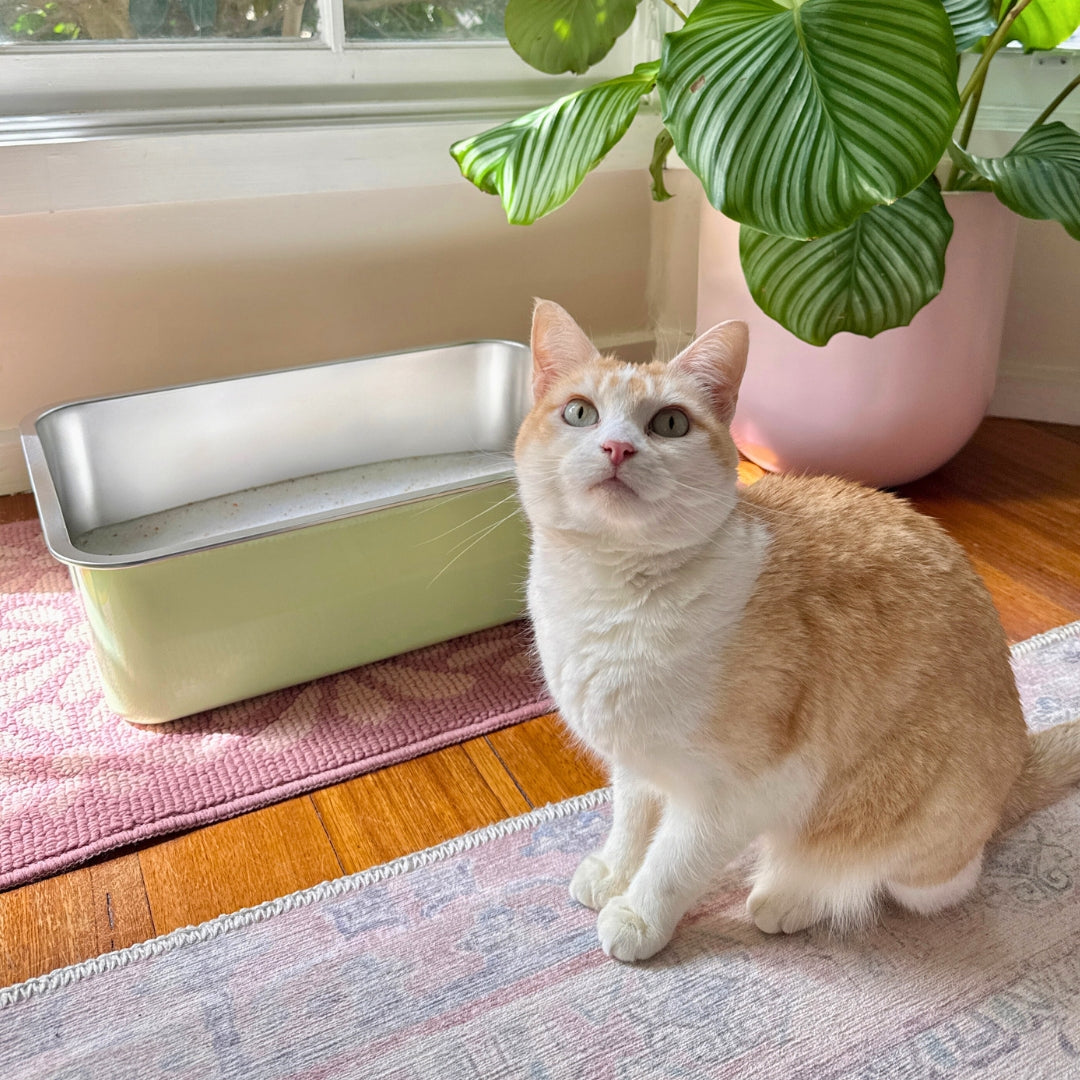
Stainless steel - specifically 304-grade - has a completely non-porous surface. There's no place for odour or bacteria to embed. When you clean it, you're cleaning all of it.
People who switch from plastic to stainless steel often notice the difference immediately: the tray smells like whatever you cleaned it with, not like cat. That's what genuinely clean looks like.
A quick note on covered boxes
If you're using a covered or hooded litter box, that can compound the smell problem significantly. Enclosed spaces trap ammonia and heat, which intensifies odour and can actually discourage cats from using the box. Open-top trays ventilate naturally and are generally better for both odour control and cat comfort.
Bottom line
If your litter box smells after cleaning, it's almost never about how you're cleaning it. It's usually the age of the box, the porosity of the plastic, or not cleaning deeply often enough.
Replacing an older plastic tray (especially one that's scratched or discoloured) will make a bigger difference than any cleaning product.