Stainless Steel vs Plastic Litter Box: Which Is Actually Better?
If you've ever scrubbed a plastic litter tray and still walked away thinking something smells off, you're not imagining it. The problem isn't your cleaning routine. It's the material.
Here's an honest breakdown of how stainless steel and plastic actually compare - so you can make a decision based on what matters, not just what's cheapest at the checkout.
The core problem with plastic
Plastic litter boxes look fine when new. But plastic is porous, which means the surface is covered in microscopic scratches and channels - and cat urine, bacteria, and ammonia settle into those gaps over time.
No amount of scrubbing removes what's embedded in the material itself. This is why a plastic tray that's six months old smells different to a brand new one, even if you clean it every day. You're not cleaning out the odour - you're cleaning the surface around it.
There's also a growing body of concern around plastics leaching chemicals (including BPA and microplastics) when exposed to the concentrated ammonia in cat urine. The industry doesn't talk about this much, but it's worth knowing.
Why stainless steel is different
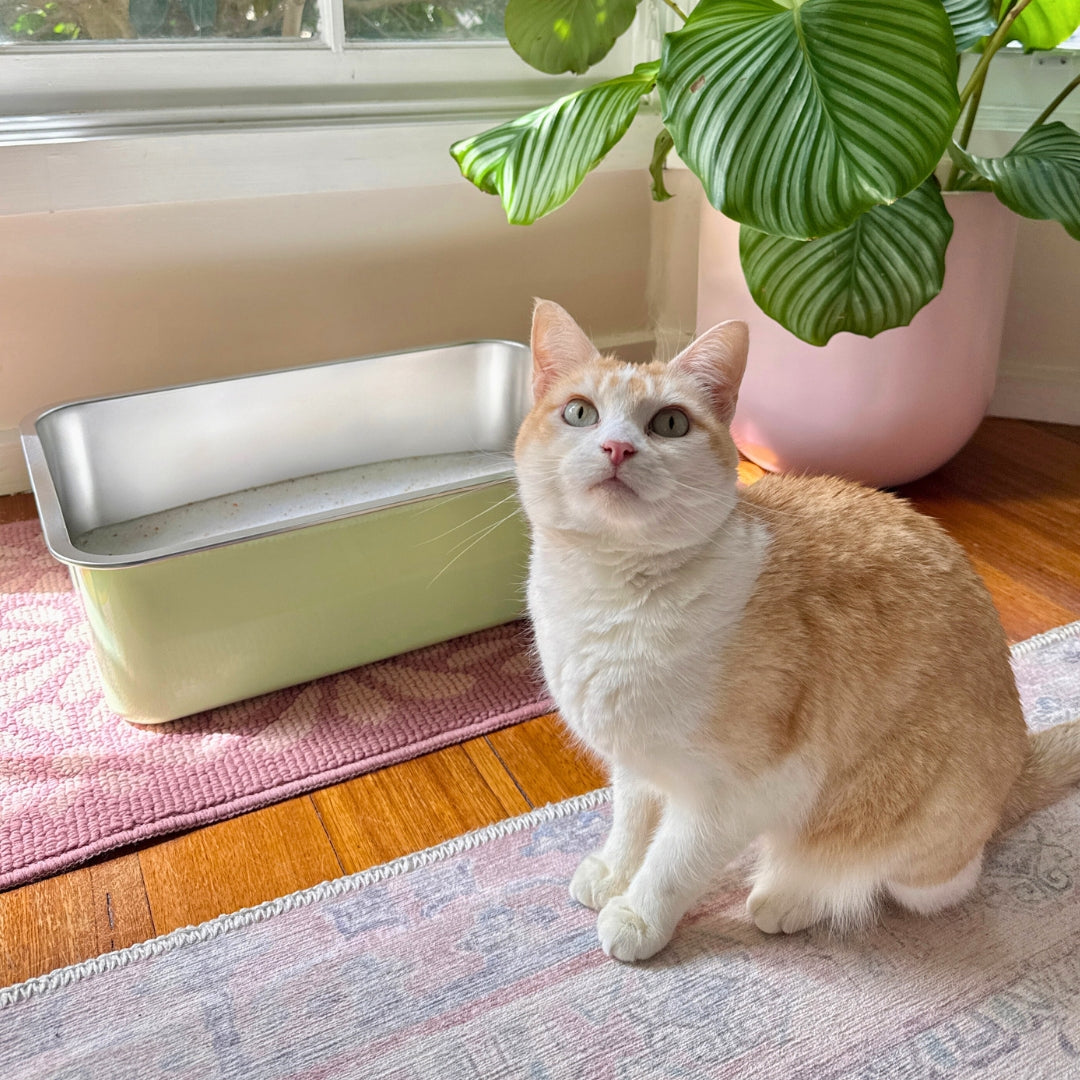
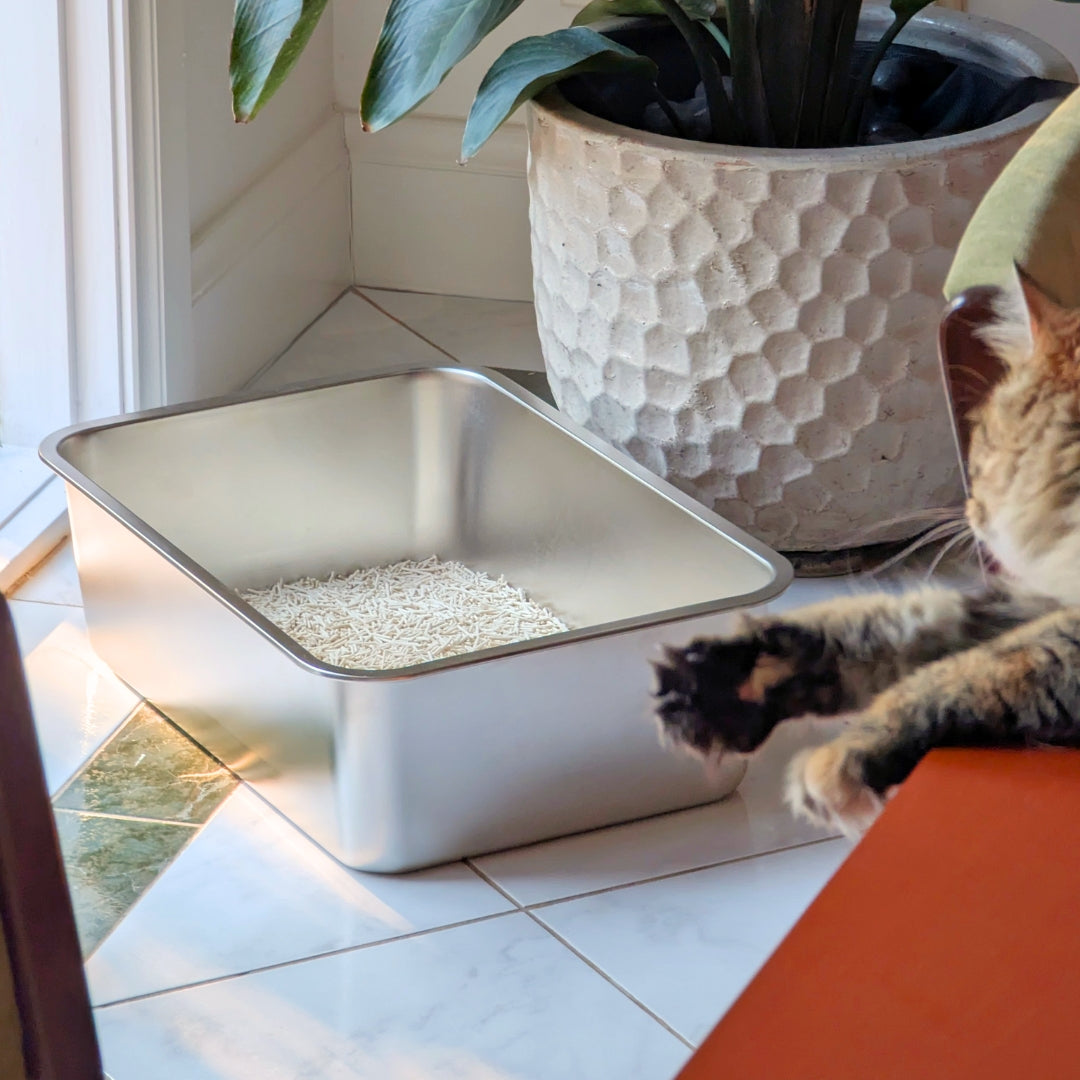
304-grade stainless steel - the same grade used in commercial kitchens - is non-porous. There's nowhere for bacteria or odour to hide. When you clean it, you're actually cleaning it.
That non-porous surface also means:
- No staining from litter or waste
- No yellowing over time
- No lingering smell between cleans
- Actually hygienic, rather than just visually clean
It also doesn't scratch the way plastic does. Cat claws dig into plastic trays over time, creating more surface area for bacteria. Stainless steel holds its surface.
What about cost?
Yes, a stainless steel litter tray costs more upfront. A good one will sit somewhere between $85 and $95 AUD. A basic plastic tray might be $15–$20.
But plastic trays need replacing. Most cat owners find themselves buying a new one every year or two - either because they're discoloured, warped, cracked, or just impossible to get truly clean anymore. Over a cat's lifetime (15+ years), that adds up significantly.
A stainless steel tray, looked after properly, lasts indefinitely. You buy it once.
Are there any downsides to stainless steel?
A few worth knowing:
- They're slightly heavier than plastic - not a problem once placed, but can be noticeable when moving for cleaning
- Some cats are briefly curious about the new material, though most adjust within a few days
- The upfront cost is real - it's an investment, not an impulse buy
The verdict
If you're prioritising hygiene, odour control, and long-term value, stainless steel wins clearly. It's not a marginal improvement on plastic - it's a different category of clean.
If your budget is genuinely tight right now and you need a temporary solution, plastic works. But most people who switch to stainless steel say the same thing: they wish they'd done it sooner.